



© 2025 AffordableJourney. Built with care by our team. All rights reserved.
Choosing how to get a car in Spain is not always as straightforward as it seems. Buying a vehicle has traditionally been the preferred option for people who want independence, convenience and the freedom to travel whenever they need. However, owning a car also comes with financial commitments that extend well beyond the purchase price. Insurance, maintenance, taxes, depreciation, repairs and other expenses can make car ownership considerably more expensive than it initially appears.
For people who do not want to commit to purchasing a vehicle, car subscription services offer another possibility. Instead of paying a large amount upfront and taking responsibility for every aspect of ownership, drivers can explore a subscription arrangement that provides access to a car through recurring payments.

This is where REVEL comes into the conversation. Through its website, driverevel.com, REVEL gives people in Spain an alternative way to think about getting a car. Rather than approaching mobility exclusively through traditional ownership, its subscription proposition makes it possible to consider a more flexible arrangement.
But does subscribing actually make more financial sense than buying? Is it a better choice for someone living in Madrid or Barcelona? What about families, professionals, frequent travellers and people who expect to stay in Spain for several years?
The answer depends on how often you drive, how long you need a vehicle, your financial circumstances and how much responsibility you want to take on. A car subscription is not automatically cheaper than buying, just as purchasing a car is not necessarily the most economical decision for everyone.
In this guide, we compare REVEL’s car subscription approach with traditional car ownership in Spain, examine the expenses involved in both options and explain which arrangement may be more suitable for different types of drivers.
Understanding the Difference Between a Car Subscription and Buying a Car
Before comparing the two options, it is worth understanding how each arrangement works. Although both give you access to a vehicle, the financial commitments and responsibilities are quite different.
Buying a car means paying for a vehicle and becoming its owner. You can purchase it outright using your savings or finance the purchase through a loan. Once the transaction is complete, the car belongs to you, subject to any outstanding finance or lender conditions.
You are responsible for the costs associated with keeping it on the road. These typically include insurance, road taxes, servicing, repairs, tyres, inspections and fuel or electricity. You also take on the financial impact of depreciation, which reduces the vehicle’s resale value over time.
A car subscription or personal renting arrangement, on the other hand, gives you access to a vehicle in exchange for a recurring monthly payment. You do not purchase the vehicle or automatically become its owner. Instead, the provider manages various ownership-related services according to the agreement.

REVEL operates in Spain through a personal renting model. Its proposition is built around a new vehicle, a monthly payment and a range of included services. Customers can choose between different contract durations, depending on whether they prioritise a lower monthly payment or greater flexibility.
This distinction is important because REVEL should not be viewed as a conventional car rental company offering vehicles for a few days. Its arrangements are designed for people who need a car over a longer period.
Feature | Buying a car | REVEL personal renting |
|---|---|---|
Vehicle ownership | You own the vehicle | The vehicle remains under the renting arrangement |
Initial payment | Purchase price or down payment may apply | No traditional purchase down payment |
Monthly payment | Depends on financing | Fixed subscription/renting payment |
Insurance | Arranged separately | Included |
Maintenance | Your responsibility | Included |
Repairs | Your responsibility, subject to warranty | Included under the agreement |
Road taxes | Your responsibility | Included |
Mileage | No contractual subscription allowance | Annual allowance applies |
Resale | You manage the sale | No resale process when the contract ends |
Flexibility | You can sell whenever you choose | Subject to minimum contract and cancellation terms |
The important point is that neither option is universally better. Buying gives you ownership and long-term control, while REVEL offers a packaged way to access a new car without managing several separate ownership expenses.
The Initial Financial Commitment: Buying Requires More Capital
One of the biggest differences between purchasing a car and subscribing to one is the amount of money you need at the beginning.
When buying a vehicle in Spain, you generally have two choices. You can pay the full purchase price upfront or finance the vehicle through a bank, dealership or other lender.
Paying outright can be attractive because you avoid interest charges and monthly loan repayments. However, it also means committing a substantial amount of your savings to a depreciating asset.
For example, imagine that you want to purchase a vehicle costing €25,000. Paying the entire amount upfront would leave you with a car but reduce your available savings by €25,000.
If you finance the same vehicle, you may need to provide a deposit and then make monthly payments over several years. The exact amount depends on the interest rate, loan duration, deposit and financing conditions.
There may also be additional expenses when purchasing a vehicle, depending on whether it is new or used, its registration circumstances and the applicable taxes.
REVEL approaches the initial expense differently. Its website advertises personal renting without an entry payment, meaning customers do not have to purchase the vehicle or provide a traditional purchase down payment.
This can make a difference for someone who wants to keep their savings available for other purposes.
For example, a self-employed professional might prefer to retain cash for business operations rather than spend a large amount purchasing a vehicle. Similarly, someone who has recently relocated to Spain may not want to make a significant financial commitment immediately after moving.
However, it is important to understand that no down payment does not mean there are no initial financial requirements. Customers must complete REVEL’s financial validation process and should review the contract, first payment arrangements and any applicable deposit or guarantee before signing.
Which option wins?
REVEL may be more attractive if preserving savings and avoiding a large upfront purchase is your priority. Buying may be preferable if you already have sufficient savings and want to avoid ongoing subscription payments.
Monthly Payments: Predictability Versus Long-Term Ownership
Monthly expenses are another important factor when comparing buying and subscribing.
If you purchase a car through financing, your monthly payment primarily covers the vehicle loan. Insurance, maintenance, servicing, taxes and repairs are generally separate expenses.
This means your actual monthly cost of owning a vehicle can be higher than the loan repayment displayed by a dealership.
For instance, someone financing a €25,000 vehicle might have a monthly instalment of several hundred euros, depending on the financing arrangement. They must then budget separately for insurance, servicing and other expenses.
With REVEL, the monthly payment is designed to cover several of these expenses together.
According to the official website, its monthly renting payment includes:
The selected new vehicle.
Comprehensive insurance, subject to a €300 excess.
Roadside assistance.
Regular maintenance.
Breakdowns and repairs covered by the arrangement.
Tyre replacement due to normal wear.
Applicable vehicle taxes.
A replacement vehicle.
Additional drivers at no extra charge.
Management of fines.
An annual allowance of 15,000 kilometres, with an additional 1,000 kilometres offered as a bonus.
A fuel discount of €0.08 per litre.
This bundled arrangement makes budgeting easier because several expenses are incorporated into one recurring payment.
However, the monthly amount varies according to the vehicle and selected contract. A smaller city car will generally have a different payment from a premium SUV.
The REVEL homepage has displayed a BMW X3 offer at €898 per month, while its vehicle catalogue and promotional material should be checked for the latest available models and individual offers. Prices can change, so it is better to use the live vehicle listing rather than assume that an advertised price applies to every model or contract duration.
You should also remember that fuel, electricity, parking, tolls and certain excluded damages remain expenses to consider.
Which option wins?
REVEL is attractive to people who value predictable monthly expenses. Buying can be more economical for someone who owns a vehicle outright and is comfortable managing variable maintenance and insurance costs.
Insurance: A Separate Expense When You Buy
Car insurance is a necessary consideration for anyone driving in Spain.
When purchasing a vehicle, you need to arrange an appropriate insurance policy. The cost depends on several factors, including the vehicle, driver’s age, driving experience, location, claims history and selected coverage.
A basic third-party policy may cost considerably less than comprehensive insurance, but it provides a different level of protection.
Drivers who purchase expensive new vehicles often consider more extensive coverage to protect themselves against unexpected damage, theft and other risks.
The challenge is that insurance is not a one-time expense. It is an ongoing cost that needs to be included in your annual vehicle budget.
REVEL simplifies this aspect by including comprehensive insurance in its monthly payment. The company’s published FAQ specifies a €300 excess.
This means the insurance is part of the renting arrangement rather than something customers need to arrange independently for the vehicle.
Nevertheless, comprehensive insurance should not be interpreted as unlimited protection against every possible expense. Drivers should carefully read the policy and understand the circumstances in which the excess applies, what is excluded and how claims are handled.
For someone who has recently moved to Spain, arranging insurance can also involve additional considerations. Insurers may ask for information about driving history, residency and previous insurance coverage.
Having insurance incorporated into a REVEL agreement can make the process more straightforward, although customers still need to satisfy the provider’s eligibility requirements.

Which option wins?
REVEL offers convenience because comprehensive insurance is included. Buying may suit drivers who have access to competitive insurance rates or want complete freedom to select their own insurer and coverage.
Maintenance and Repairs: Who Takes Responsibility?
Every vehicle requires maintenance. Even a new car needs periodic servicing, tyre replacements and inspections to remain in good condition.
When you purchase a vehicle, these expenses become your responsibility after the purchase, although manufacturer warranties may cover certain defects for a specified period.
The cost of maintaining a car depends on its age, make, model, engine type and usage.
For example, a vehicle that is driven frequently in urban traffic may experience different wear patterns from one used primarily for occasional motorway journeys.
Older vehicles can also become more expensive to maintain as components wear out.
Unexpected repairs are particularly difficult to budget for. A mechanical issue can arise at an inconvenient time, and the cost may vary considerably depending on the affected component.
REVEL’s monthly payment includes maintenance, breakdowns and repairs covered by its agreement. It also includes tyre replacement caused by normal wear.
The company provides an app through which customers can arrange maintenance appointments and tyre-related services.
Its published guidance explains that drivers can request appointments through the app, WhatsApp or telephone.
There are, however, important limitations. Damage caused by misuse is not necessarily included. For example, REVEL specifically states that punctures, cuts and tyre damage resulting from improper use, such as hitting kerbs or driving with incorrect tyre pressures, are excluded from its normal tyre coverage.
This is an important distinction because customers should not assume that every possible repair is automatically free.
For someone who does not want to coordinate servicing appointments, search for workshops or worry about ordinary maintenance expenses, REVEL’s bundled approach can be appealing.
On the other hand, a person who owns a relatively new vehicle and performs regular maintenance at an affordable independent workshop may find traditional ownership perfectly manageable.
Which option wins?
REVEL is particularly attractive if you prefer having routine maintenance and covered repairs included in one monthly arrangement. Buying may be better if you are comfortable managing servicing and already have a reliable, affordable mechanic.
Depreciation: The Hidden Cost of Owning a Car
Depreciation is one of the most overlooked expenses when purchasing a vehicle.
A new car generally loses value as it gets older and accumulates kilometres. The extent of depreciation depends on its make, model, condition, mileage, market demand and wider economic circumstances.
Imagine purchasing a new car for €25,000. After several years, you might find that its resale value is considerably lower than the original purchase price.
The difference between the purchase price and eventual resale price represents a real cost of ownership.
This can become particularly frustrating for people who like changing vehicles regularly. Every time they purchase a new car, they are exposed to another period of depreciation.
When you use REVEL, you do not purchase the vehicle and therefore do not have to manage its resale value at the end of the renting period.
You pay for access to the vehicle during the agreed contract period. Once the arrangement ends, the vehicle is returned according to the contract.
This removes the responsibility of advertising the vehicle, negotiating with prospective buyers, arranging inspections and handling the paperwork associated with selling it.
The trade-off is that you do not build ownership equity in the vehicle.
With traditional purchasing, even though a car loses value, you still own an asset that may be sold later. With renting, the monthly payments are the cost of using the vehicle rather than payments towards eventual ownership.
This is why comparing only the purchase price with the total subscription payments can be misleading.
A fair comparison should account for depreciation, maintenance, insurance, taxes, financing costs and the vehicle’s resale value.
Which option wins?
REVEL is appealing if you would rather avoid the uncertainty and inconvenience of depreciation and resale. Buying can make more financial sense if you intend to keep the vehicle for a long time and are comfortable with its declining market value.
Contract Duration: How Long Do You Actually Need a Car?
The length of time you expect to use a vehicle can significantly influence your decision.
Someone who needs a car for only a year may not want to purchase one, particularly if they expect to relocate or change their circumstances.
Meanwhile, someone who expects to live in Spain for the next decade may find ownership more attractive.
REVEL offers two main contract-duration choices on its official website.
The 12-month option
This is designed for customers who value greater flexibility.
The initial minimum commitment is 12 months.
After completing the first year, customers can continue month to month.
Customers can cancel after the minimum period, subject to two months’ advance notice.
This option may suit people who are uncertain about their future requirements.
The 36-month option
This option is designed for people who prefer a longer commitment in exchange for a more competitive monthly payment.
The minimum commitment is three years.
The monthly payment is generally lower than the more flexible arrangement for the same vehicle and comparable conditions.
At the end of the contract, customers can choose another REVEL vehicle.
The official website also describes an option to purchase the existing vehicle at its market value at the end of the 36-month period.
These options give customers a choice between flexibility and a lower monthly payment.
However, there is an important point to understand about early cancellation. REVEL’s published cancellation guidance states that ending the agreement before completing the minimum commitment can involve paying the two-month notice period and 50% of the remaining instalments up to the end of the minimum commitment.
This means the 12-month option is not a one-month subscription that can be cancelled whenever you want. It still requires a full initial year.
Similarly, the 36-month option should be approached as a genuine three-year commitment.
For someone who knows they will need a car for three years, the lower monthly price may be attractive. For someone whose employment, residence or family circumstances might change within a year, the shorter option may be worth considering.
Which option wins?
REVEL offers a useful middle ground for people who want a structured commitment without purchasing a vehicle. Buying may be better for those who need complete control over how long they keep their car.
Mileage Limits: An Important Difference Between the Two Options
Mileage is one of the most important factors to consider before choosing a car subscription.
When you purchase a vehicle, you can generally drive as many kilometres as you want without worrying about a contractual annual mileage allowance. Of course, higher mileage can increase maintenance costs and reduce resale value, but there is no subscription mileage package to manage.
REVEL works differently.
Its standard monthly renting payment includes 15,000 kilometres per year, plus an additional 1,000 kilometres as a bonus.
Customers who need more mileage can increase their annual allowance through the REVEL app.
The published additional mileage options are:
Annual mileage | Additional monthly cost |
|---|---|
15,000 km | Included |
20,000 km | €30 |
25,000 km | €70 |
These figures are particularly useful when estimating the actual cost of a REVEL subscription.
For example, someone who drives approximately 12,000 kilometres annually can remain within the standard allowance. A person commuting long distances between cities may need the 20,000 or 25,000-kilometre option.
Consider someone living in Madrid who regularly travels to Valencia, Zaragoza and other Spanish cities for work. Their annual mileage could be considerably higher than that of someone who mainly drives within their neighbourhood.
It is therefore important to estimate your driving habits before selecting a contract.
The mileage allowance is not necessarily a disadvantage. In fact, it encourages customers to understand their expected vehicle usage and select an appropriate package.
However, drivers who regularly cover very high distances should compare the additional subscription expense with the cost of owning a vehicle without contractual mileage restrictions.
One more detail deserves attention: REVEL advertises an additional 1,000 kilometres as a bonus, but customers should confirm how that allowance is applied under their individual contract.
Which option wins?
Buying is more suitable for drivers who cover very high or unpredictable annual distances. REVEL can work well for people whose driving habits comfortably fit within its available mileage packages.

Access to Newer Cars Without the Hassle of Selling Your Old Vehicle
Another interesting advantage of renting is the ability to change vehicles without going through the traditional buying and selling process.
People who purchase cars often keep them for several years. This is a sensible approach because it allows them to spread the purchase cost over a longer period.
However, some drivers prefer using newer vehicles and do not want to deal with selling an older car every few years.
Selling a vehicle privately in Spain can involve several steps:
Researching the current market value.
Preparing the car for sale.
Taking photographs and publishing advertisements.
Responding to enquiries.
Arranging viewings and test drives.
Negotiating the selling price.
Completing the required ownership transfer documentation.
Dealership trade-ins can make the process easier, but the amount offered may differ from what you could achieve through a private sale.
REVEL provides another route.
At the end of the relevant contract, customers can arrange to return the vehicle under the agreement and explore another REVEL vehicle.
For customers choosing the 36-month arrangement, the company describes the possibility of taking another new vehicle when the contract ends. It also provides an option to purchase the existing car at market value.
This arrangement may appeal to people who enjoy having access to modern vehicles without taking on the administrative work associated with changing cars.
It can also be useful for households whose needs change over time.
For example, someone living alone might initially prefer a compact city car. A few years later, after starting a family, they might prefer an SUV with additional space.
Under traditional ownership, making that change requires selling the existing vehicle and purchasing another one.
With REVEL, customers can consider a different vehicle when their renting commitment ends.
Of course, vehicle availability, delivery schedules and the conditions of the new agreement still matter.
Which option wins?
REVEL has an advantage for people who like changing vehicles periodically. Buying remains attractive for drivers who prefer keeping one familiar car for many years.
Convenience: Managing One Monthly Payment Instead of Multiple Providers
Owning a car involves dealing with several different companies.
You might purchase the vehicle from one dealership, arrange insurance with another provider, use a separate workshop for servicing and contact another company for roadside assistance.
None of this is particularly difficult once you have established your arrangements, but it does require some organisation.
For people with busy professional and personal schedules, managing multiple services can become inconvenient.
REVEL attempts to simplify this process by bringing several vehicle-related services into one monthly payment.
Its website promotes a digital contracting process, home delivery and customer support through its app.
The basic process involves selecting a vehicle, submitting an application, completing the financial validation process, signing the agreement and arranging delivery.
Customers can receive the vehicle at an address they choose within mainland Spain and the Balearic Islands, according to the company’s published information.
This can be particularly useful for someone who does not want to spend time visiting several dealerships.
The company also states that its subscription arrangements include roadside assistance available around the clock, along with a replacement vehicle under the stated conditions.
There is also an included additional-driver provision, which can be useful for couples or families sharing a vehicle.
However, customers should check exactly who qualifies as an authorised additional driver and what documentation is required.
Buying a car offers a different type of convenience. Once you own the vehicle, you can decide which service providers to use and manage your vehicle according to your preferences.
For people who enjoy having complete control over their arrangements, this freedom may be more valuable than an all-inclusive service.
Which option wins?
REVEL is appealing to people who prefer convenience and fewer separate arrangements. Buying offers greater independence when selecting service providers and managing the vehicle.
What Happens When Something Goes Wrong?
An unexpected breakdown can disrupt almost anyone’s schedule.
Imagine driving to work in Barcelona when your vehicle develops a mechanical problem. You may need to arrange roadside assistance, organise repairs and find alternative transportation while your car is unavailable.
If you own the vehicle, the responsibility for managing these arrangements generally falls on you.
Manufacturer warranties may help with eligible defects, and separate insurance policies may provide certain forms of assistance. However, the coverage depends on the individual arrangements you have purchased.
REVEL includes roadside assistance and a replacement vehicle as part of its advertised monthly package.
This can provide additional reassurance to customers who do not want to organise every aspect of a breakdown independently.
The replacement vehicle provision is particularly relevant for people who rely on their cars for everyday activities.
A professional who travels between client locations, for instance, may find it difficult to manage several days without transportation.
A family may also depend on its car for school journeys, shopping and other regular commitments.
Having assistance and a replacement vehicle included can therefore make the overall arrangement more convenient.
Nevertheless, it is important to distinguish between a service being included and having unlimited access to it under every circumstance.
Customers should read the agreement to understand when replacement vehicles are provided, what categories may be available and whether any conditions apply.
Similarly, roadside assistance coverage should be reviewed to understand its geographical scope and the situations covered.
Which option wins?
REVEL offers a convenient packaged approach to breakdown assistance. Buying may be preferable for someone who already has comprehensive assistance through their insurer or manufacturer.

Buying a Car Can Be More Economical Over the Long Term
Despite the advantages of subscriptions, traditional ownership has a major benefit: you eventually stop making vehicle purchase or financing payments.
This is particularly relevant when you keep a car for a long time.
Consider someone who purchases a reliable vehicle and keeps it for eight or ten years.
Once the financing is completed, they no longer have a monthly loan instalment. Their remaining expenses include insurance, maintenance, taxes, fuel and other running costs.
They also retain an asset that can be sold when they no longer need it.
By comparison, someone using a renting arrangement continues paying for access to a vehicle throughout the contract period.
Even when the monthly payment includes insurance, maintenance and taxes, the total cost accumulates over time.
This is why people should avoid assuming that a subscription is automatically the cheaper option.
The right comparison involves looking at the total cost of ownership rather than simply comparing a monthly renting payment with a monthly loan instalment.
For example, imagine two people who both want to use a vehicle for five years.
The first purchases a €25,000 car. The second chooses a REVEL vehicle with a monthly renting payment of €400.
Illustrative calculation only. The €400 monthly amount is hypothetical, not a current REVEL offer.
Five-year cost comparison
PURCHASING
€25,000
Initial vehicle purchase price
REVEL EXAMPLE
€24,000
€400 × 60 monthly payments
What these figures do not include
Purchasing: insurance, maintenance, taxes, repairs, financing costs and resale value.
Renting: any applicable deposit, fuel, parking, tolls, excess mileage and excluded damage.
At first glance, the two amounts appear similar. However, the comparison changes considerably when all expenses are included.
The purchased vehicle may still have a substantial resale value after five years. This reduces the effective cost of ownership.
The REVEL customer, meanwhile, has paid for five years of vehicle access and the services included in the agreement, without acquiring the vehicle.
On the other hand, the renting customer has avoided several separate ownership expenses and the uncertainty of selling the vehicle.
This is why the most economical option depends on the complete financial picture.
If your objective is to minimise the cost of transportation over eight or ten years, purchasing a reliable vehicle and keeping it for an extended period may be difficult for a subscription service to beat.
If your objective is to manage expenses predictably, avoid a purchase and use a newer vehicle without dealing with resale, REVEL can be a more attractive proposition.
Financial Eligibility: Can Everyone Subscribe to REVEL?
Another important consideration is whether you qualify for the service.
Purchasing a car with cash is relatively straightforward from an eligibility perspective. If you can afford the vehicle and complete the required purchase formalities, you can generally proceed.
Financing is different because lenders assess the applicant’s financial position.
REVEL also has a financial validation process.
According to its published eligibility information, customers must provide identification and demonstrate that they have the financial capacity to meet the monthly payments.
The main requirements include:
A valid Spanish DNI or NIE.
Being between 20 and 80 years old.
A valid driving licence with at least one year of experience, as specified in its current vehicle-listing information.
A Spanish driving licence or a licence from a country recognised under the relevant DGT arrangements.
Successful financial validation.
Customers can complete the financial validation by connecting their bank account or submitting supporting income documentation.
For employees, this may include recent payslips. Self-employed applicants may need to provide relevant tax documentation. Pensioners can provide documents confirming their pension income.
The precise documents required can vary depending on the applicant’s circumstances.
This means REVEL is not simply a service where anyone can select a car and immediately receive it without checks.
The company needs to establish that the customer can meet the financial commitment.
This is especially relevant for people who have recently moved to Spain. A valid residence document and an eligible driving licence do not necessarily guarantee approval.
Foreign driving licences also require attention. Spain has specific rules regarding the recognition and exchange of foreign licences, and REVEL publishes a list of countries whose licences are recognised under the relevant arrangements.
Anyone unsure about their licence status should verify the requirements with the Spanish traffic authority before applying.
Which option wins?
Buying outright may be more accessible for someone who has sufficient funds but does not meet REVEL’s financial eligibility criteria. REVEL can be convenient for eligible customers who want a structured monthly payment instead of purchasing a vehicle.
Driving in Spanish Cities: Which Arrangement Is More Practical?
Spain has a wide variety of driving environments.
The experience of owning a car in Madrid can be quite different from having one in a smaller coastal town or a rural area.
In major cities such as Madrid, Barcelona and Valencia, residents may use their vehicles for commuting, weekend trips and occasional journeys outside the city.
However, parking availability, traffic congestion and low-emission-zone restrictions can influence whether having a car is worthwhile.
Madrid and Barcelona have low-emission-zone regulations that affect certain vehicles. Drivers should check the applicable rules, vehicle classifications and access requirements before selecting a car.
This is particularly important when purchasing an older used vehicle.
A new vehicle obtained through REVEL may offer a more straightforward starting point when considering emissions classification, but customers should still check the exact environmental classification of the selected model and the local access rules.
A car subscription can also appeal to people who have recently moved to Spain.
For example, an international professional relocating to Barcelona might not know whether they will remain in the city for five years or move elsewhere after completing a work assignment.
Committing to a vehicle purchase in that situation may feel unnecessary.
REVEL’s 12-month option could provide an alternative, provided the customer meets the eligibility requirements and understands the cancellation notice.
Families living outside city centres may approach the decision differently.
In suburban communities, having a car can be essential for commuting, school runs, shopping and visiting relatives. If a family expects to use the same vehicle for many years, purchasing may be a sensible long-term decision.
People living in rural areas may also need to consider annual mileage, servicing access and vehicle suitability.
Ultimately, the most practical arrangement depends on your location and lifestyle, not simply the monthly price.
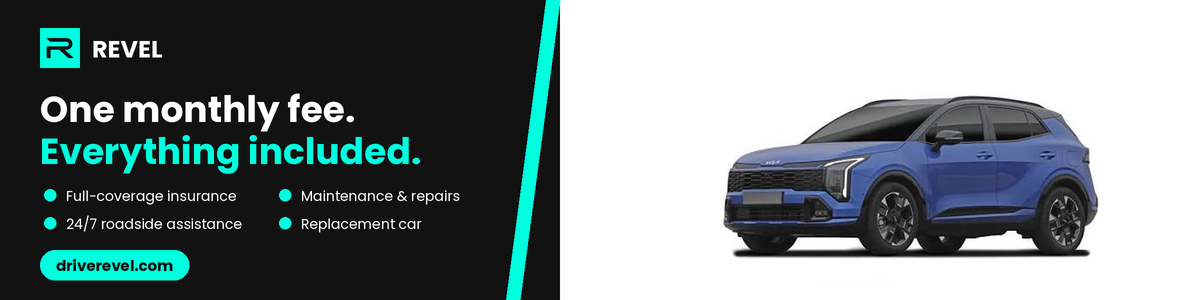
REVEL Pricing in Spain: What Should You Expect to Pay?
Price is understandably one of the first things people consider when comparing subscription services with buying a car.
REVEL does not advertise one universal monthly subscription price for every vehicle. The amount depends on the model, selected contract duration and applicable offer.
Its website allows customers to explore available vehicles and view their corresponding monthly prices.
The official homepage has featured a BMW X3 at €898 per month. REVEL’s vehicle catalogue and published promotional information have also referenced entry-level offers from €296 per month. These are different vehicle offers, not a standard price applicable to all subscriptions.
Because vehicle availability and promotions can change, customers should consult the live catalogue before making a decision.
REVEL pricing and mileage information
Published entry-level reference
€296/mo
Promotional catalogue reference; verify live availability
Homepage featured example
€898/mo
BMW X3 advertised offer
Included mileage
15,000 km annually.
1,000 additional bonus kilometres.
Mileage upgrades
Allowance | Monthly supplement |
|---|---|
20,000 km/year | €30 |
25,000 km/year | €70 |
Figures are based on REVEL’s published website information. Confirm the selected vehicle’s live price, applicable taxes, contract terms and availability before ordering.
Explore REVEL vehicles
There are a few things customers should consider when reviewing these prices.
First, compare the same vehicle category. A compact hatchback and a premium SUV are not directly comparable. Their purchase prices, insurance costs, maintenance expenses and monthly renting payments will naturally differ.
Second, compare the contract duration. REVEL’s 12-month arrangement prioritises flexibility, while the 36-month arrangement offers a more competitive monthly payment. Looking at a price without checking its contract duration can lead to an inaccurate comparison.
Third, account for mileage. If you need 20,000 or 25,000 kilometres annually, include the corresponding monthly supplement when calculating the actual cost.
Fourth, understand the insurance excess. REVEL advertises comprehensive insurance with a €300 excess. This should be included in your assessment of potential out-of-pocket expenses.
Finally, check the complete contract. Ask about the first payment, any deposit or guarantee, cancellation conditions, delivery, vehicle availability and potential charges for damage beyond normal wear.
For the most accurate information, visit REVEL’s official website rather than relying on older advertisements or prices published by third-party comparison sites.
The Environmental Consideration: Buying Versus Renting
Environmental considerations are becoming increasingly important when selecting a vehicle in Spain.
Some drivers want a car with lower emissions, while others are interested in hybrid or electric models because of their potential running-cost benefits and suitability for urban driving.
When purchasing a vehicle, you have control over the model and can keep it for as long as you want.
This can be a positive factor if you choose a vehicle that suits your long-term needs and maintain it properly.
With REVEL, customers can explore available vehicles through the company’s online catalogue. The selection and availability of specific models should be checked directly.
One aspect of REVEL’s proposition is its stated participation in projects intended to compensate for vehicle-related CO₂ emissions through reforestation initiatives in Spain.
This is a sustainability-related initiative, but it should not be confused with a claim that driving the vehicle produces no emissions.
A petrol or diesel vehicle continues to produce exhaust emissions when driven. A hybrid or electric vehicle has a different emissions profile, and its overall environmental impact depends on several factors, including energy sources and manufacturing.
Customers who are particularly interested in sustainability should compare the actual specifications of individual vehicles, including fuel consumption, emissions classification and energy requirements.
They should also consider how much they drive.
A person who drives only occasionally may not need a vehicle at all, particularly if public transport, cycling or car-sharing services meet their requirements.
For someone who needs a car regularly, choosing an efficient vehicle and using it responsibly can make a meaningful difference.
Which option wins?
Neither buying nor subscribing is automatically more environmentally friendly. The vehicle’s technology, usage, lifetime and maintenance matter more than the payment arrangement alone.
Who Should Choose REVEL Instead of Buying a Car?
REVEL is not necessarily the right choice for every driver. Its value becomes clearer when you consider the type of person who would benefit most from its service.
Here are some situations where its personal renting arrangement may make sense.
Professionals who want predictable expenses
People with busy professional lives may not want to spend time arranging insurance, servicing appointments and vehicle repairs.
Having several services included in one monthly payment can make managing transportation easier.
This is particularly relevant for professionals who rely on their cars for commuting and regular business-related journeys.
People who have recently relocated to Spain
Moving to another country involves plenty of decisions, from finding accommodation to understanding local regulations and arranging finances.
Purchasing a vehicle immediately may not be ideal for someone who is still figuring out how long they will stay in Spain.
A 12-month REVEL arrangement may provide an alternative, although customers must still complete the financial and driving-licence eligibility checks.
People who prefer driving newer vehicles
Some drivers enjoy changing their vehicles every few years rather than keeping the same car for a decade.
REVEL’s longer-term arrangements provide an opportunity to move to another new vehicle when the existing contract ends.
This can be appealing to people who value having a newer vehicle without going through the traditional resale process.
Families looking for convenience
Families often have several responsibilities competing for their time.
Having insurance, maintenance, roadside assistance and a replacement vehicle included can make managing everyday transportation easier.
The additional-driver provision is another useful feature for households where more than one person needs access to the car.
People who want to avoid a large purchase
A vehicle purchase can tie up a considerable amount of money.
Someone who prefers to preserve their savings for housing, investments, business activities or other financial priorities may appreciate the possibility of accessing a new vehicle without paying its full purchase price.
The important consideration is whether the recurring payment comfortably fits their budget.
Who Should Buy a Car Instead?
Although REVEL offers several conveniences, traditional ownership remains a strong option for many people.
There are certain circumstances in which buying a car is likely to make more sense.
Drivers planning to keep their car for many years
If you expect to use the same vehicle for eight, ten or even more years, purchasing can be financially attractive.
Once you have completed the purchase or loan repayments, you can continue using the vehicle without paying a monthly renting fee.
People who drive substantial annual distances
If your annual mileage is significantly higher than REVEL’s available packages, purchasing may be more convenient.
You will still need to account for maintenance and depreciation, but you will not have a contractual mileage allowance to manage.
Drivers who want complete ownership
Some people simply prefer owning their vehicles.
They want the freedom to modify their cars, decide when to sell them and choose their own maintenance arrangements.
A renting contract comes with conditions, so it will not offer the same degree of control.
People who can afford to purchase a car outright
If you have sufficient savings and can purchase a suitable vehicle without taking out a loan, you may avoid interest payments and monthly financing obligations.
This can make ownership attractive, particularly when you intend to keep the vehicle for an extended period.
Drivers who want an older or used vehicle
REVEL’s proposition focuses on new vehicles.
Someone who wants to purchase an affordable second-hand car may find that traditional buying offers more choices within their budget.
A well-maintained used vehicle can also provide good value for someone who does not need a brand-new model.

REVEL Subscription vs Buying a Car: A Practical Decision Guide
The following comparison brings together the main differences discussed throughout this guide.
Your priority | More suitable option |
|---|---|
Avoiding a large vehicle purchase | REVEL |
Having one payment for several vehicle services | REVEL |
Changing cars every few years | REVEL |
Avoiding the resale process | REVEL |
Keeping a car for 8–10 years | Buying |
Driving without mileage-package restrictions | Buying |
Having complete ownership | Buying |
Selecting your own insurance provider | Buying |
Keeping an older used vehicle | Buying |
Predictable maintenance expenses | REVEL |
Lower long-term costs after paying off a car | Buying |
This table is a starting point rather than a universal financial recommendation.
For example, someone who purchases an expensive premium vehicle and replaces it every three years may experience significant depreciation. In that situation, renting could be worth comparing.
Similarly, someone who subscribes to an inexpensive vehicle for several years may pay more overall than someone who buys a reliable used car and maintains it properly.
The key is to compare the complete cost of each arrangement over the same period.
How to Compare REVEL With Buying Before Making a Decision
If you are seriously considering a vehicle in Spain, it is worth taking some time to calculate the actual financial difference.
Rather than deciding based on the advertised monthly payment, use a consistent comparison.
Step 1: Choose the vehicle you actually need
Start by identifying the type of car that suits your lifestyle.
Do you need a compact vehicle for city driving, a family car with additional space or an SUV for longer journeys?
Compare similar vehicles rather than comparing a small hatchback with a premium SUV.
Step 2: Check the complete purchase cost
If you are buying, calculate the total purchase price, applicable taxes, registration expenses and financing charges.
If you are using a loan, consider the deposit, interest rate, monthly repayments and total amount payable.
Step 3: Calculate annual running expenses
Include:
Insurance.
Maintenance and servicing.
Tyres.
Road taxes.
Repairs not covered by warranties.
Fuel or electricity.
Parking and tolls.
Remember that certain expenses may vary from one year to another.
Step 4: Check the REVEL monthly price
Visit the official catalogue and select a comparable vehicle.
Check both the 12-month and 36-month arrangements, as the monthly payments can differ.
Also include any additional mileage costs that apply to your driving habits.
Step 5: Compare the same period
If you are comparing a three-year REVEL contract with purchasing a car, calculate the ownership expenses over those same three years.
Do not forget to subtract the estimated resale value of the purchased vehicle.
Step 6: Consider your personal circumstances
Finally, think about how long you expect to remain in Spain, whether your annual mileage is predictable and how much responsibility you want to take on.
A slightly more expensive arrangement may still be worthwhile if it saves time and provides services that you genuinely value.
Frequently Asked Questions About REVEL Subscription and Buying a Car in Spain
Is REVEL better than buying a car in Spain?
It depends on your priorities. REVEL may be more suitable if you want a new vehicle with insurance, maintenance, roadside assistance and other services included in one monthly payment. Buying may be better if you want ownership, unlimited contractual mileage and the possibility of keeping the vehicle for many years.
Does REVEL require an upfront payment?
REVEL advertises its personal renting service without an entry payment or traditional vehicle purchase down payment. However, customers should confirm the complete initial payment requirements, including any applicable deposit or guarantee, in their individual agreement.
What is included in a REVEL monthly payment?
The published package includes the selected vehicle, comprehensive insurance with a €300 excess, maintenance, covered repairs, roadside assistance, tyres for normal wear, applicable taxes, a replacement vehicle, additional drivers and an annual mileage allowance of 15,000 kilometres plus 1,000 bonus kilometres.
How long can I subscribe to a car through REVEL?
REVEL currently advertises 12-month and 36-month renting options. The 12-month arrangement offers greater flexibility after the initial commitment, while the 36-month arrangement is intended for customers who want a lower monthly payment.
Can I cancel REVEL whenever I want?
Not immediately after signing. The 12-month option requires an initial minimum commitment of one year. After that, customers can cancel with two months’ advance notice. Early termination before completing the minimum commitment may involve additional charges under the published cancellation conditions.
Does REVEL have a mileage limit?
Yes. The standard package includes 15,000 kilometres annually, with an additional 1,000 kilometres offered as a bonus. Customers can increase the allowance to 20,000 kilometres for an additional €30 per month or 25,000 kilometres for €70 per month.
Does REVEL include insurance?
Yes. REVEL includes comprehensive insurance with a €300 excess in its advertised monthly payment. Customers should review the insurance terms to understand exclusions and the circumstances in which the excess applies.
Can someone else drive my REVEL car?
REVEL advertises additional drivers at no extra charge. However, additional drivers must meet the applicable eligibility and authorisation requirements. Check the agreement before allowing another person to use the vehicle.
Can I buy my REVEL car at the end of the contract?
According to REVEL’s published information, customers completing a 36-month arrangement can have the option to purchase the existing vehicle at its market value. This is not the same as automatically owning the vehicle through monthly payments.
Does REVEL deliver vehicles to your home?
Yes. REVEL advertises free home delivery to addresses in mainland Spain and the Balearic Islands. Customers can arrange delivery to a suitable address, such as their home or office, subject to the company’s delivery arrangements.
Does REVEL include maintenance and tyre replacement?
Yes. Routine maintenance and tyre replacement resulting from normal wear are included according to the company’s published terms. Damage caused by misuse, including certain punctures, cuts and impacts, may not be covered.
Is REVEL suitable for people who have recently moved to Spain?
It may be suitable, provided they meet the company’s eligibility requirements. Applicants need valid identification, an eligible driving licence and successful financial validation. People with foreign driving licences should check the relevant DGT recognition or exchange requirements.

Should You Subscribe Through REVEL or Buy a Car in Spain?
The decision between subscribing and buying ultimately comes down to what you value more: ownership or convenience.
Buying a car is still a sensible choice for people who plan to keep the same vehicle for a long time, drive substantial distances and want complete control over their property. It can also be more economical when the vehicle is purchased at a reasonable price, maintained properly and used for many years.
However, traditional ownership comes with responsibilities that are easy to overlook when calculating the purchase price. Insurance, maintenance, repairs, taxes, depreciation and resale arrangements all contribute to the overall cost.
REVEL offers an alternative for people who would rather avoid managing these expenses separately.
Its personal renting proposition combines a new vehicle with comprehensive insurance, maintenance, roadside assistance, tyres, taxes and other services in one monthly payment. The availability of 12-month and 36-month options also gives customers a choice between greater flexibility and a more competitive monthly rate.
What makes REVEL particularly interesting is that it addresses several of the common inconveniences associated with owning a car. You do not need to purchase the vehicle outright, arrange a separate insurance policy or organise ordinary maintenance independently.
That does not mean it will always be cheaper. The mileage allowance, minimum commitment, monthly payment and lack of vehicle ownership must all be considered before signing an agreement.
Our recommendation: If you are planning to stay in Spain for many years, want to own your vehicle and are comfortable handling maintenance and resale, buying is worth serious consideration. But if you value predictable expenses, prefer driving a new vehicle and do not want the responsibilities associated with ownership, REVEL is worth exploring.
Before making your final decision, compare the available vehicles, review the current monthly prices and read the contract conditions carefully.
You can explore the available models and subscription options directly at REVEL’s official website and see whether its personal renting approach matches your driving needs in Spain.