



© 2025 AffordableJourney. Built with care by our team. All rights reserved.
Finding the right weight loss program can feel overwhelming. With countless apps, meal plans, coaching services, and fitness platforms available today, it’s difficult to know which option is actually worth your time and money.
Two names that frequently appear at the top of the conversation are WeightWatchers and Noom. Both programs are designed to help people lose weight and develop healthier habits, but they approach the process in very different ways.
WeightWatchers has been helping people manage their weight for more than six decades and is known for its Points® system, community support, and flexible eating approach. Noom, on the other hand, built its reputation as a digital-first platform focused on psychology, behavior change, and personalized coaching.
If you’re trying to decide between these two popular programs, this detailed comparison will help you understand how they work, where they differ, and which one may be a better fit for your goals in 2026.

An Overview of WeightWatchers
WeightWatchers, often referred to as WW, was founded in 1963 and remains one of the most recognized names in weight management.
The program revolves around a proprietary Points® system that assigns values to foods and beverages. Members receive a personalized daily points budget and use the WeightWatchers app to track meals throughout the day.
Instead of focusing exclusively on calorie counting, WeightWatchers encourages healthier choices by assigning lower point values to many nutrient-dense foods and higher values to foods that may be less nutritionally beneficial.
The company also provides recipe collections, food tracking tools, activity tracking, workshops, coaching options, and community support features.
An Overview of Noom
Noom is a digital health platform that focuses heavily on behavioral psychology.
Rather than using a points-based approach, Noom primarily emphasizes calorie awareness, education, habit formation, and behavior change.
The platform delivers daily lessons that aim to help users better understand their eating habits, emotional triggers, decision-making patterns, and long-term wellness goals.
Noom combines food logging with educational content, coaching tools, and goal-setting features intended to support sustainable lifestyle changes.
Because of its psychology-focused approach, Noom often attracts users who want to understand why they make certain food choices rather than simply tracking what they eat.
The Core Philosophy Behind Each Program
One of the biggest differences between WeightWatchers and Noom is the philosophy behind each program.
WeightWatchers focuses on simplifying food decisions through its points system.
The goal is to help members make healthier choices without requiring them to calculate calories, macronutrients, or complex nutritional information throughout the day.
Noom takes a different route.
The platform emphasizes behavioral psychology and self-awareness. Users spend time learning about habits, mindset, emotional eating, and decision-making patterns.
Both programs aim to support weight loss and healthier lifestyles, but the path they take is noticeably different.

How WeightWatchers Tracks Food
WeightWatchers uses its proprietary Points® system.
Every food and beverage receives a point value based on nutritional factors.
Users receive a personalized daily points budget and log meals through the WeightWatchers app.
One feature many members appreciate is the inclusion of ZeroPoint foods.
These foods do not require tracking and can be consumed without affecting the daily points allowance.
Examples include many fruits, vegetables, lean proteins, and other nutrient-dense foods selected by WeightWatchers.
This approach often reduces the burden of tracking every single item consumed throughout the day.
How Noom Tracks Food
Noom relies more heavily on calorie awareness.
Users log meals in the app, and foods are organized into color categories designed to encourage balanced eating habits.
The color system helps users understand which foods may be more calorie-dense and which foods may provide more volume relative to their calorie content.
Unlike WeightWatchers, Noom does not use a points system.
Instead, users focus on calorie budgets, nutritional awareness, and educational lessons that explain how different food choices affect overall goals.
Which Program Is Easier to Follow?
The answer depends largely on personal preference.
Many people find WeightWatchers easier because the points system simplifies daily tracking.
Rather than worrying about calories, protein, fats, and carbohydrates, members simply focus on their points budget.
The availability of ZeroPoint foods can also make the program feel less restrictive.
Noom may appeal more to people who enjoy learning about nutrition and behavior.
The educational lessons require a greater level of engagement, which some users find valuable and others find time-consuming.
If simplicity is your priority, WeightWatchers may have an advantage.
If education and self-reflection are important to you, Noom may be more appealing.
Mobile App Experience
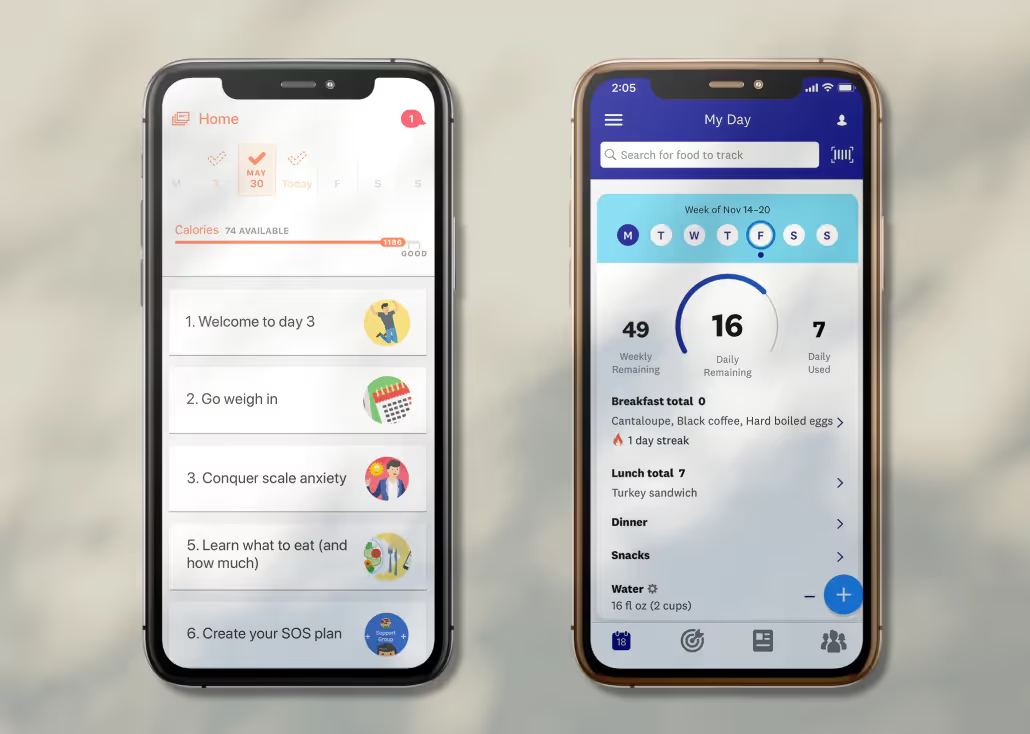
Both programs rely heavily on mobile apps.
The WeightWatchers app includes:
Food tracking
Weight tracking
Activity tracking
Recipe collections
Barcode scanning
Community support
Progress monitoring
The Noom app includes:
Food logging
Daily lessons
Goal tracking
Weight tracking
Coaching tools
Behavioral education
While both apps offer comprehensive experiences, the WeightWatchers app is generally centered around tracking and support, while Noom focuses more heavily on educational content and habit-building exercises.
Coaching and Support
Support systems are another area where the two platforms differ.
WeightWatchers offers multiple levels of support depending on membership type.
Members may have access to workshops, virtual sessions, community groups, and coaching options.
Community support has been a major part of WeightWatchers for decades and remains one of its defining features.
Noom also provides support resources, though the structure differs.
The platform places greater emphasis on digital coaching tools and behavioral guidance delivered through the app experience.
The type of support you prefer may influence which program feels more useful.
Community Features
WeightWatchers has long been known for creating a sense of community.
Members can interact with others, share progress, exchange tips, and celebrate achievements together.
Many users appreciate the accountability that comes from participating in a supportive environment.
Noom focuses less on large community interaction and more on individual learning and self-development.
Some users prefer the social aspect of WeightWatchers, while others appreciate Noom’s more independent experience.
Educational Content
Education is one area where Noom stands out.
The platform includes a structured curriculum that explores topics such as:
Habit formation
Emotional eating
Goal setting
Motivation
Decision making
Behavioral psychology
These lessons are designed to help users understand the factors that influence eating behaviors.
WeightWatchers also provides educational resources, but the program is generally less centered on daily psychology lessons.
Users who enjoy learning about behavior and mindset may find Noom’s educational approach especially appealing.
Meal Planning and Recipes
Both programs provide recipe resources, though WeightWatchers has historically placed greater emphasis on meal planning.
WeightWatchers members gain access to an extensive collection of recipes that fit within the program’s points system.
Many users appreciate having ready-made meal ideas that align with their daily goals.
Noom also provides food recommendations and nutritional guidance, but recipes are generally not as central to the overall experience.
For individuals who frequently cook at home and want structured meal inspiration, WeightWatchers may offer an advantage.

Flexibility and Food Choices
Neither WeightWatchers nor Noom requires users to eliminate entire food groups.
This is one reason both programs have attracted large audiences.
WeightWatchers encourages flexibility through its points budget and ZeroPoint foods.
Noom encourages flexibility through calorie awareness and behavior-based decision making.
Both approaches allow room for occasional treats and restaurant meals.
The difference lies in how those decisions are tracked and managed.
Accountability
Accountability can play a major role in long-term success.
WeightWatchers provides accountability through tracking, workshops, coaching, and community interaction.
Noom provides accountability through daily engagement, lessons, coaching tools, and consistent self-monitoring.
Some people benefit more from group support.
Others prefer personal accountability and independent learning.
Choosing the right fit often comes down to your personality and preferred learning style.
WeightWatchers for Beginners
WeightWatchers is often considered beginner-friendly.
The points system simplifies decision making and helps members quickly understand how foods fit within the program.
The app handles much of the calculation process automatically.
New members can begin tracking food almost immediately without needing extensive nutrition knowledge.
For individuals who want a straightforward framework, WeightWatchers may feel easier to adopt.
Noom for Beginners
Noom can also be suitable for beginners, although the experience may require more daily engagement.
Users are encouraged to complete lessons, reflect on habits, and actively participate in educational content.
Some people enjoy this deeper level of involvement.
Others may prefer a more streamlined experience focused primarily on tracking.
Long-Term Sustainability
One of the most important questions for any weight loss program is whether people can maintain it over time.
WeightWatchers has built its reputation around sustainable eating habits and flexibility.
The program’s structure allows members to continue participating without completely avoiding favorite foods.
Noom emphasizes sustainability through behavior change and self-awareness.
The platform attempts to address underlying habits rather than focusing solely on short-term results.
Both programs are designed with long-term lifestyle changes in mind.
Cost Comparison
Both WeightWatchers and Noom operate on subscription-based models.
Pricing can vary depending on promotions, subscription length, location, and included features.
Because plans change periodically, prospective members should always check the official websites of both companies for the most current pricing information.
When evaluating value, it is important to consider not only the monthly cost but also the features, support, and resources included in each membership.
Feature | WeightWatchers (WW) | Noom |
|---|---|---|
| Founded | 1963 | 2008 |
| Primary Focus | Weight management through a Points® system, food tracking, and support | Weight management through psychology, behavior change, and education |
| Tracking Method | Proprietary Points® system | Calorie tracking with food categorization |
| Food Logging | Yes | Yes |
| Calorie Counting Required | No, points are used instead | Yes, calories are a core part of the program |
| ZeroPoint Foods | Yes, many fruits, vegetables, lean proteins, and other selected foods do not require tracking | No dedicated ZeroPoint food system |
| Daily Lessons | Limited educational content | Daily psychology and behavior-focused lessons |
| Meal Planning Support | Extensive recipe library and meal-planning resources | Food recommendations and nutrition guidance |
| Recipe Collection | Large recipe database | Smaller emphasis on recipes |
| Behavioral Psychology | Included as part of wellness guidance | Core focus of the entire program |
| Community Support | Strong member community and social features | More limited community interaction |
| Group Workshops | Available on select membership plans | Not a primary feature |
| One-on-One Coaching | Available on select plans | Coaching features available through the platform |
| Barcode Scanner | Yes | Available for food tracking |
| Restaurant Food Database | Extensive | Available but less central to the experience |
| Activity Tracking | Yes | Yes |
| Weight Tracking | Yes | Yes |
| Habit Building Tools | Yes | Strong emphasis |
| Educational Content | Moderate | Extensive |
| Flexibility With Food Choices | High | High |
| Restrictive Food Rules | No | No |
| Beginner Friendliness | Very beginner-friendly | Beginner-friendly but requires more engagement |
| Learning Curve | Relatively easy | Slightly steeper because of educational content |
| Time Commitment | Low to moderate | Moderate to high |
| Mobile App | Central to the experience | Central to the experience |
| Suitable for Busy Professionals | Yes | Yes, though daily lessons require additional time |
| Suitable for People Who Dislike Calorie Counting | Excellent choice | May be less appealing |
| Suitable for People Interested in Nutrition Education | Good | Excellent |
| Suitable for Social Accountability | Excellent | Moderate |
| Suitable for Independent Learners | Good | Excellent |
| Long-Term Habit Building | Strong focus | Strong focus |
| Medical Weight Management Support | Available through specific offerings | Available through specific offerings depending on location and eligibility |
| Overall Approach | Practical, structured, and support-driven | Educational, psychological, and behavior-driven |
Pros of WeightWatchers
WeightWatchers offers several advantages:
Long-established brand
Flexible eating approach
Easy-to-understand points system
ZeroPoint foods
Extensive recipe collection
Community support
Workshops and coaching options
User-friendly food tracking tools
These features make it appealing for people who want structure without excessive complexity.
Pros of Noom
Noom also offers several strengths:
Strong focus on behavioral psychology
Educational daily lessons
Goal-setting tools
Personalized learning experience
Emphasis on habit formation
Modern digital platform
These features may appeal to individuals who enjoy learning about the psychology behind eating behaviors.
Potential Drawbacks of WeightWatchers
Some users may find the ongoing subscription cost difficult to justify.
Others may prefer traditional calorie tracking rather than a proprietary points system.
Like any program, success also requires consistency and regular engagement.
Potential Drawbacks of Noom
Some users report that the educational lessons require a significant time commitment.
Others may prefer a simpler approach focused primarily on tracking food rather than completing daily coursework.
The experience can feel more intensive for individuals who are not interested in behavioral education.
Which Program Produces Better Results?
There is no universal answer to this question.
Both WeightWatchers and Noom have helped many users pursue weight management goals.
Individual results depend on factors such as:
Consistency
Dietary choices
Physical activity
Lifestyle habits
Long-term adherence
The most effective program is often the one a person can realistically maintain over time.
Who Should Choose WeightWatchers?
WeightWatchers may be the better option if you:
Prefer a simple tracking system
Want flexibility with food choices
Enjoy community support
Like structured meal planning
Want access to recipes and workshops
Prefer a proven program with decades of history
Many users appreciate how easy the points system makes everyday decision making.
Who Should Choose Noom?
Noom may be the better option if you:
Enjoy learning about psychology and habits
Want educational content delivered daily
Prefer calorie awareness over points
Like self-reflection and behavior analysis
Want a more individualized learning experience
People who are curious about the mental side of eating behaviors often find Noom particularly interesting.
Final Verdict: WeightWatchers vs Noom
Both WeightWatchers and Noom have earned strong reputations in the weight management space, but they serve slightly different audiences.
WeightWatchers focuses on practical food tracking, flexibility, recipes, community support, and a points-based system that simplifies daily decisions.
Noom focuses more heavily on psychology, behavior change, educational content, and developing awareness around eating habits.
For people seeking a straightforward, flexible program with extensive support resources, WeightWatchers is often the easier option to integrate into daily life.
For individuals who want a deeper understanding of the behaviors and thought patterns behind their food choices, Noom may offer a more educational experience.
Ultimately, the best choice depends on your preferences, goals, and the type of support that helps you stay consistent. Both programs provide tools designed to encourage healthier habits, and long-term success is most likely to come from the program that feels sustainable for your lifestyle.